




A Time for Renewal
Wild Animal Adaptation
As winter arrives, our pace of life slows down, and we spend more time indoors, protected from the cold. Wild animals adapt to the changing season, too! Different species use a variety of strategies to survive cold months with scarce food. Snakes, reptiles, and amphibians enter a state of “brumation” - their heart rate, respiration, and digestion slow to conserve energy, but they will become active on warmer days to find food and water. Bats enter a true hibernation, or state of torpor - their body temperature drops to match the air around them, sometimes almost to freezing, and their respiration slows to one breath every one-two hours!
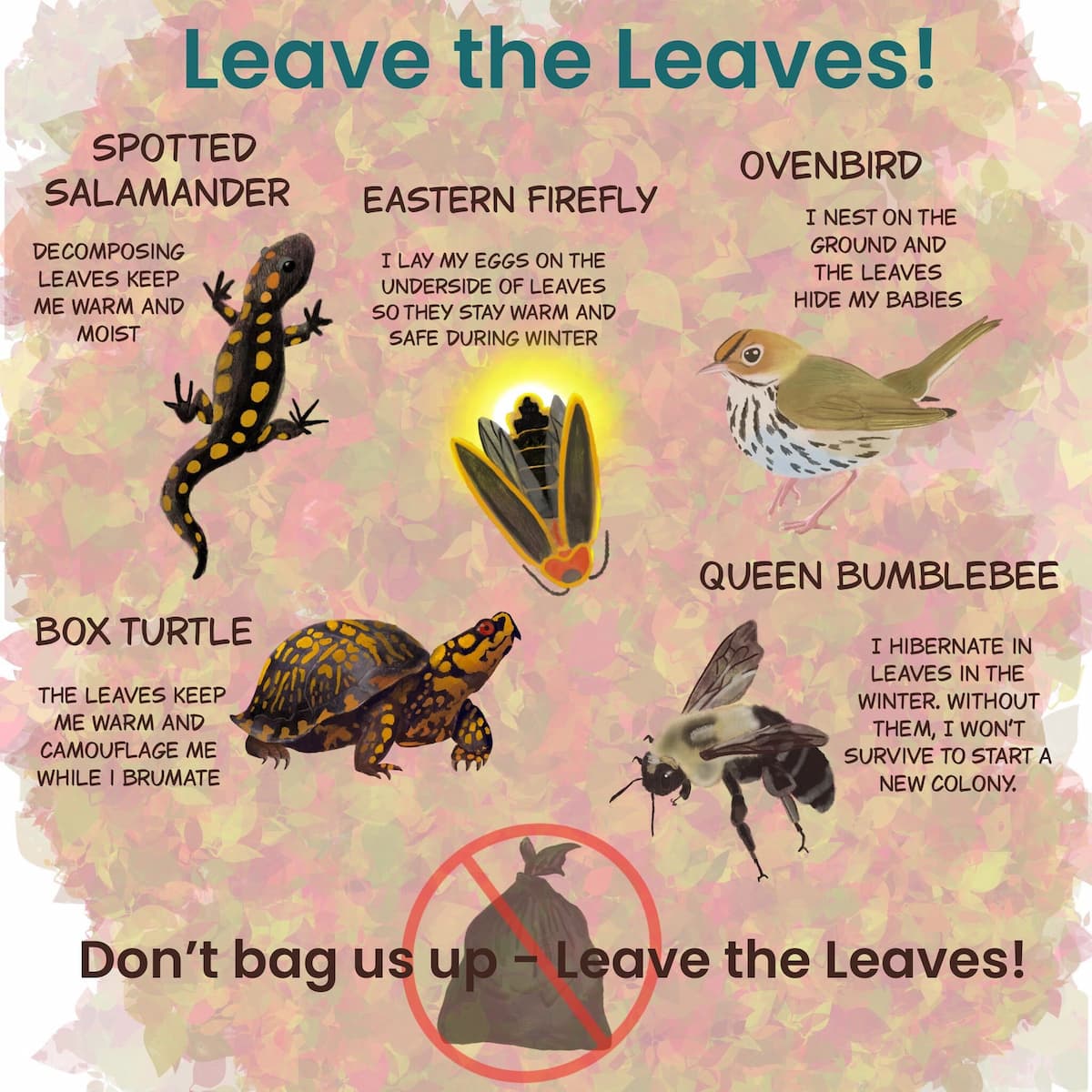
How can you help wildlife this winter? Rest from yardwork by leaving the leaves. Fallen, decomposing leaves provide warmth and shelter to many animals, including fireflies, bees, and turtles. When we bag up our leaves and throw them out, we remove important habitat our wildlife needs to survive. Avoid the yard work this season and give our wildlife a helping hand!
Plant Dormancy and Soil Nutrients
As the days shorten and the temperature drops, deciduous plants begin to enter dormancy—a process plants undergo in response to unfavorable conditions. Trees and shrubs stop producing chlorophyll and drop their leaves. Herbaceous plants die back above ground, leaving their root systems safely protected underground.
To protect themselves from freezing temperatures, they move water and nutrients out of their leaves and stems down to their root systems. They accumulate proteins and complex sugars which help prevent cellular damage from freezing temperatures.
The accumulation of leaf litter is an important part of the cycle. A layer of organic matter forms a blanket, which insulates dormant root systems. This helps to add an extra layer of protection against temperature swings, while holding in moisture. Soil microbes begin to break down this duff layer, recycling essential nutrients back into the soil.
In addition to physical insulation, the microbes also provide biological heat. As they break down the leaves, they generate heat. Throughout the winter, this serves as a vital resource that keeps the soil several degrees warmer than the air.
Yet, another reason to rest from your yardwork and leave the leaves.
Land Stewardship
While many plants settle in for a long winter’s nap, the Jefferson County Greenways conservation team is just getting warmed up. Cooler weather marks an important season for caring for our greenspaces and preparing for a colorful, healthy return of wildflowers and native plants in the spring.
Here’s what’s on our fall and winter to-do list:
- Bringing back the benefits of fire: From November through March, we plan to conduct prescribed burns at all three greenspaces. These carefully managed fires help reduce excess vegetation, encourage plant diversity, and keep our forests and prairies healthy.
- Keeping invasive species in check: Our fight against invasive plants continues year-round! We’ll use targeted methods like mechanical removal, prescribed burning, and cut-and-paint treatments to protect native habitats.
- Planting for the Future: Fall and winter are ideal times to plant native grasses and flowers, with additional seeding planned later in the season.
Even when nature slows down, our stewardship work keeps growing!
We encourage you to take time this season to observe your natural surroundings with appreciation, as nature quietly prepares for the bountiful beauty it produces in the spring.