




Volunteers Help Protect Turkey Creek Nature Preserve
Thanks to Anne Mathews, a dedicated Water Quality Citizen Scientist Tester with Alabama Water Watch, we have more than nine years of data tracking Turkey Creek’s health. This data provides a valuable baseline for identifying abnormalities caused by upstream changes that could jeopardize aquatic wildlife, including several endangered and imperiled species, as well as the health of visitors who enter the creek to cool off during Alabama’s hot summer months.
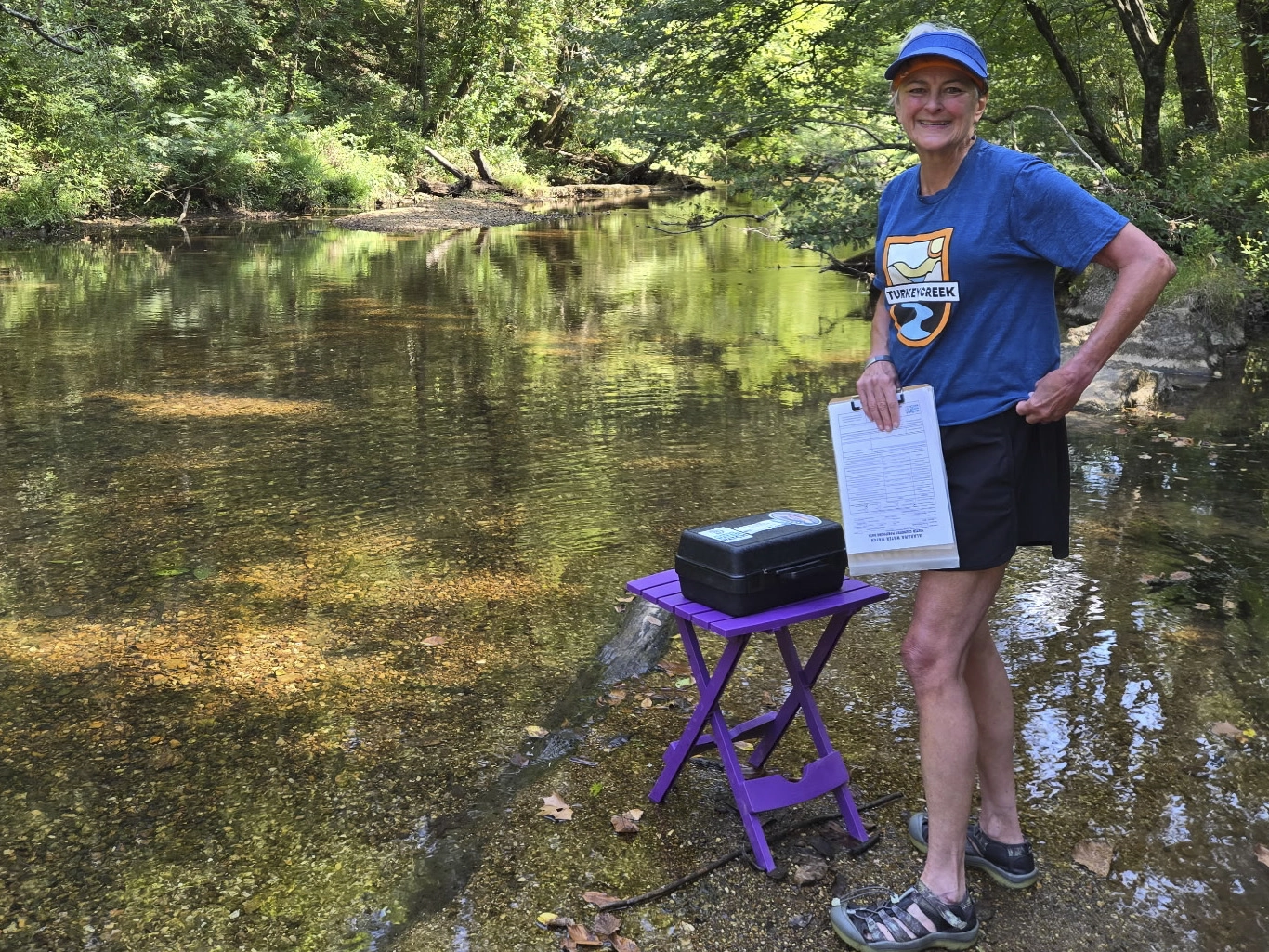
For nearly a decade, Mathews has tested the creek’s chemistry monthly and monitored bacteriological water quality during the summer months (generally May through October) at the bridge near DuPont/ Bullfrog Bend cabin, where Turkey Creek enters the Preserve.
A scientist by training, Mathews found the Water Resources Center’s Alabama Water Watch program at Auburn University a perfect way to “support the Preserve and keep my fingers in a little chemistry work” after retiring 15 years ago.
“It’s hard to believe that I’m heading into my 10th year of water testing, but it’s been fun,” Mathews says. “I continue to be amazed at how good it makes you feel and how much fun it is to be a volunteer for something you love. You walk away just feeling great because you know you’ve done something positive that will help people enjoy the space that you love.”
How Volunteer Water Quality Monitoring Protects Turkey Creek
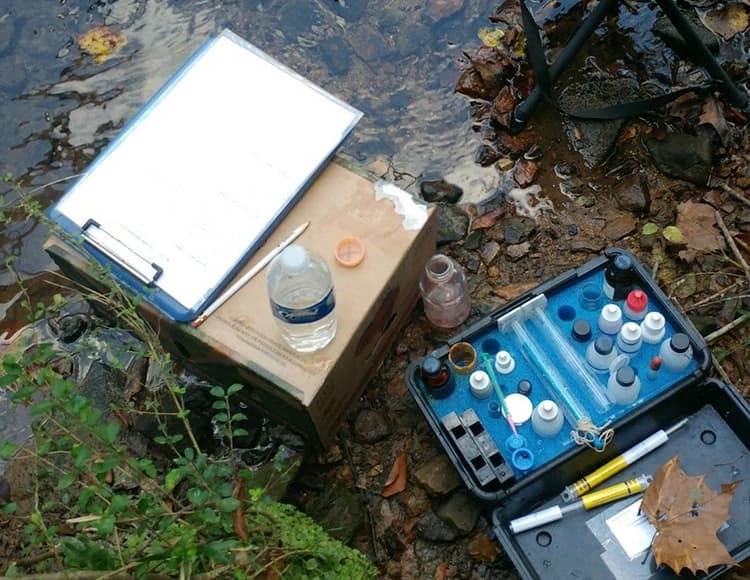
Volunteer water quality testing can help identify potential problems before they become serious threats to wildlife, visitors, and the environment.
Mathews' testing includes E. coli as an indicator bacterium for potentially hazardous contamination. A few years back, when levels reached the “increased risk” level, above the “relatively low risk” values, Charles Yeager, land & water conservation director for Jefferson County Greenways, was alerted to the test results and discovered a leaky septic tank at a gas station upstream. The warning and quick action resolved the issue before hitting the “relatively high risk” level. Mathews happily reports that levels haven’t hit above “low” since then.
What Do Water Quality Tests Reveal
Turkey Creek’s health can be measured by changes in the creek. Mathews explains how these tests reveal water quality and the conditions aquatic life needs to survive.
Turbidity
We test turbidity as an indication of sediment or materials in suspension. They can be organic (microscopic organisms) or inorganic (silt, clay), and we notice it as cloudiness. High turbidity can indicate soil erosion, which leads to sedimentation. It can block sunlight and upset the aquatic ecosystem. We do not test within 24-48 hours of rain, as this does not represent the native state of the water.
Alkalinity, pH, and hardness
Our creek is also affected by alkalinity, pH, and hardness. These measurements and their relationship help us identify industrial pollution. Alkalinity measures the buffering capacity of water. If it decreases drastically below the hardness, it could mean that the alkalinity dropped in an effort to keep the pH steady.
Our alkalinity, pH, and hardness are on the high side, since we have so much limestone in our area. The viable pH for aquatic life is 6.0-8.5. Ours routinely has a pH of 8.0 but has occasionally been 8.5. You can see that if something happened upstream, such as a limestone quarry, it could seriously affect our valuable critters.
Dissolved oxygen
And, of course, the dissolved oxygen is what gives the creek life. While it varies inversely with temperature, ours is always good. A very good level for most stream animals is 7-11 ppm. Ours is always above the minimum for life and generally stays within the upper limit with a few rare exceptions.
Together, these measurements and the historical data make it easier to spot unusual results and trigger upstream investigations into issues that may cause bigger problems.
Growing the Next Generation of Volunteer Citizen Scientists
Mathews hasn't missed a month in the past nine years, but now has help from two newly certified Citizen Scientists, with whom she will share the testing. Payton H. Stantis and Haley Osterloh-Srofe completed their training in October and will help expand the testing upstream of the Preserve.
Mathews also serves on the board of the Alabama Water Watch Association, another example of her commitment to protecting Alabama’s waterways.
Their team commitment shows how volunteers can make a difference to ensure important water quality data continues to be collected and shared for years to come. You can find monthly results at Jefferson County Greenways’ Environment Monitoring webpage.
Volunteering at Turkey Creek Nature Preserve Goes Beyond Water Testing
Water quality monitoring is just one of the many ways Mathews gives back to Turkey Creek Nature Preserve. She is also passionate about helping others discover the Preserve’s natural beauty.
“I wish more people all over Jefferson County knew about the beauty of the Preserve,” Mathews says. “Not only does it have such clean, clear water, but it also has great hiking.”
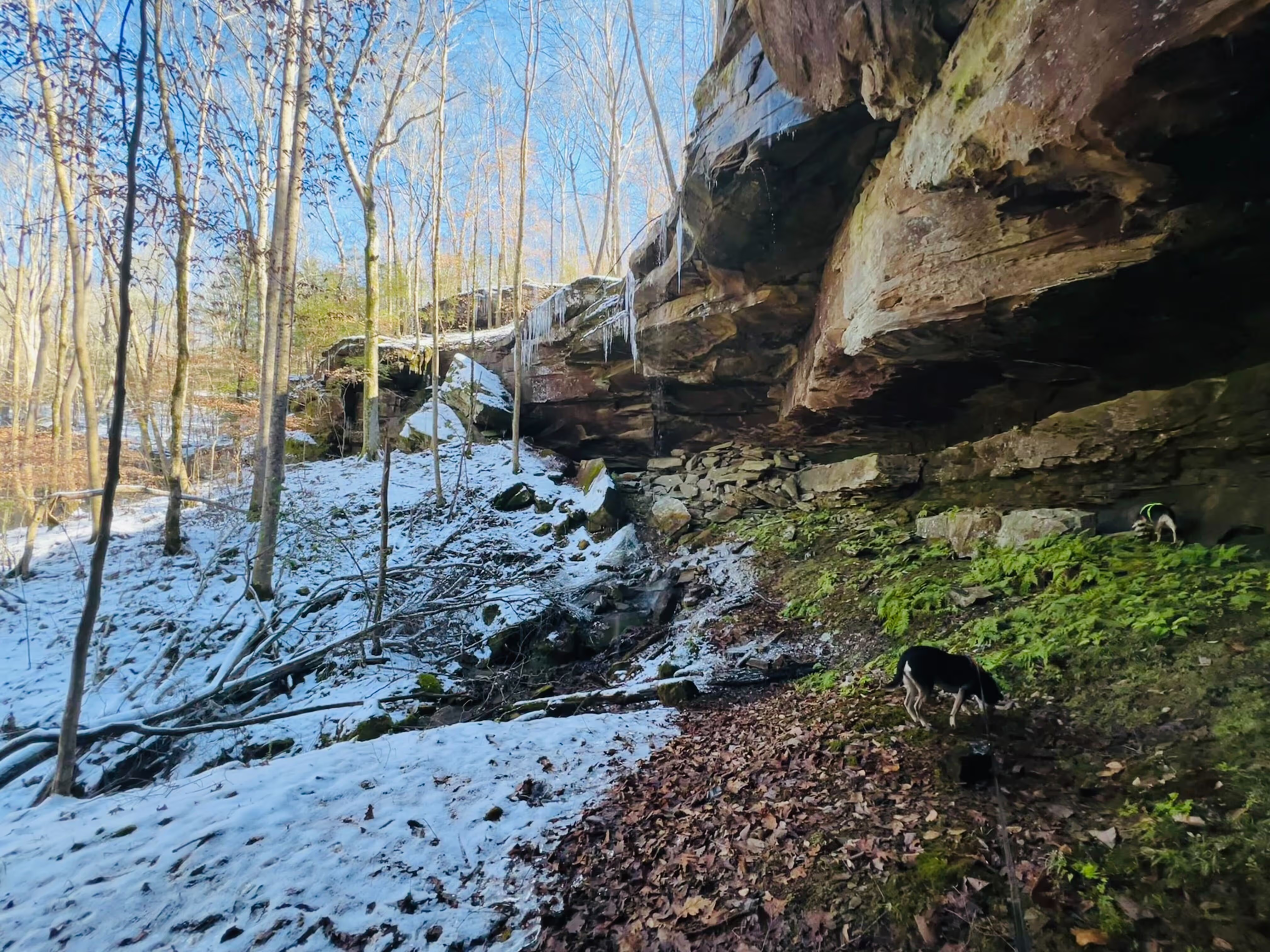
In 2013, Mathews led her hiking club, the Vulcan Trail Association, in building much of Thompson Trace and Hanby Hollow Trails. She and fellow club members maintained the trails for years before staff took over.
Mathews, along with other members of the Friends of Turkey Creek Nature Preserve volunteer organization, leads hikes from September through April or May. Anyone interested can find out more about the monthly hike at Friends of Turkey Creek Nature Preserve | Facebook
Make A Difference: Volunteer To Protect Our Greenspaces
Volunteers are essential to protecting and preserving our natural greenspaces. We’re grateful to volunteers like Anne Mathews for her longtime support of Turkey Creek Nature Preserve, to Payton Stantis and Haley Osterloh-Srofe for joining in protecting Turkey Creek, and to the many other community members who give back to our greenspaces: Red Mountain Park, Ruffner Mountain, and Turkey Creek Nature Preserve with their time, talent, and energy.
Explore volunteer opportunities with Jefferson County Greenways and help protect these beautiful greenspaces for future generations.