




MAPS Bird Banding at Ruffner Mountain
Originally published: 09/04/2025
Last updated: 09/15/2026
Ruffner Mountain’s Role in Bird Conservation
This year marks the fourth consecutive year of MAPS bird banding at Ruffner Mountain, one of only three active MAPS stations in Alabama. The MAPS program at Ruffner Mountain, a partnership between Jefferson County Greenways and Alabama Audubon, is just one of many avenues offered to better understand our state’s vast biodiversity.
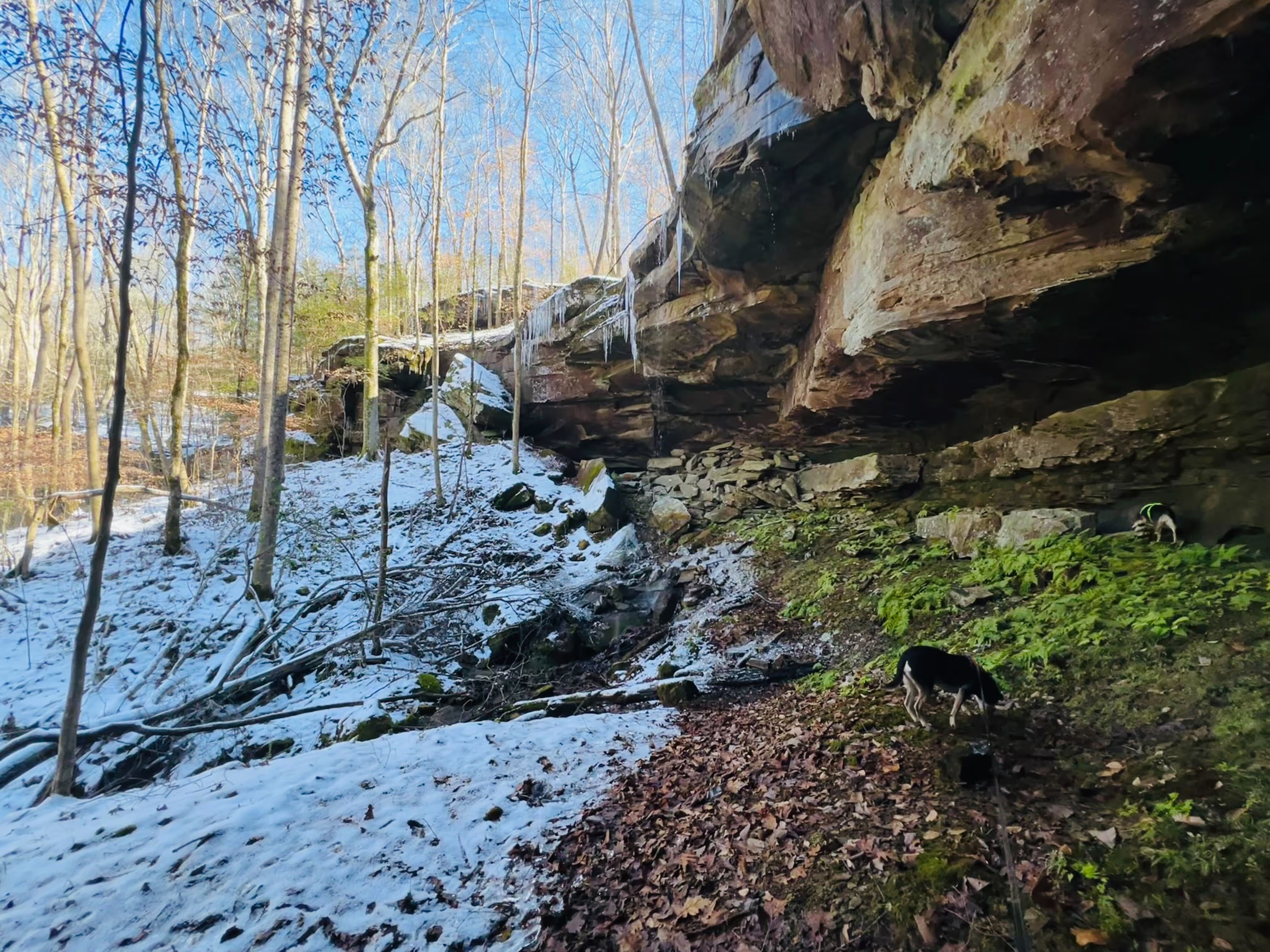
Jefferson County Greenways provides land management of Ruffner Mountain that is crucial in maintaining consistent habitats with native vegetation around the monitoring stations. October through February is Jefferson County Greenways’ land management work time for these areas when active removal of invasive plants takes place to improve the woodland and wet-meadow habitat with both standing and moving water, high canopy, dense understory, and meadow grassland which support an ideal habitat for a variety of birds and native wildlife.
March through September is the watch time in land management for these areas. Changes to habitat are limited to reduce negative impacts on research and bird activity during the nesting season when birds are forming feathers and preparing for the migratory stage beginning in September to Central and South America.
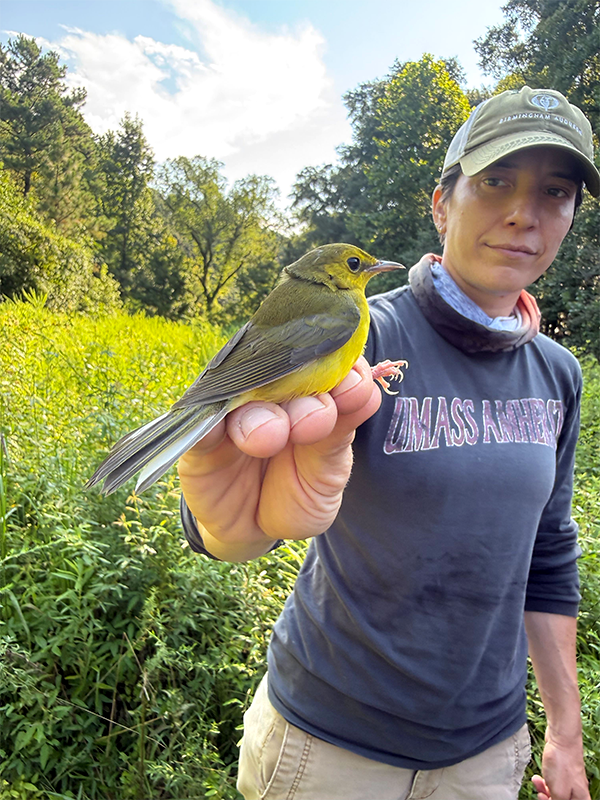
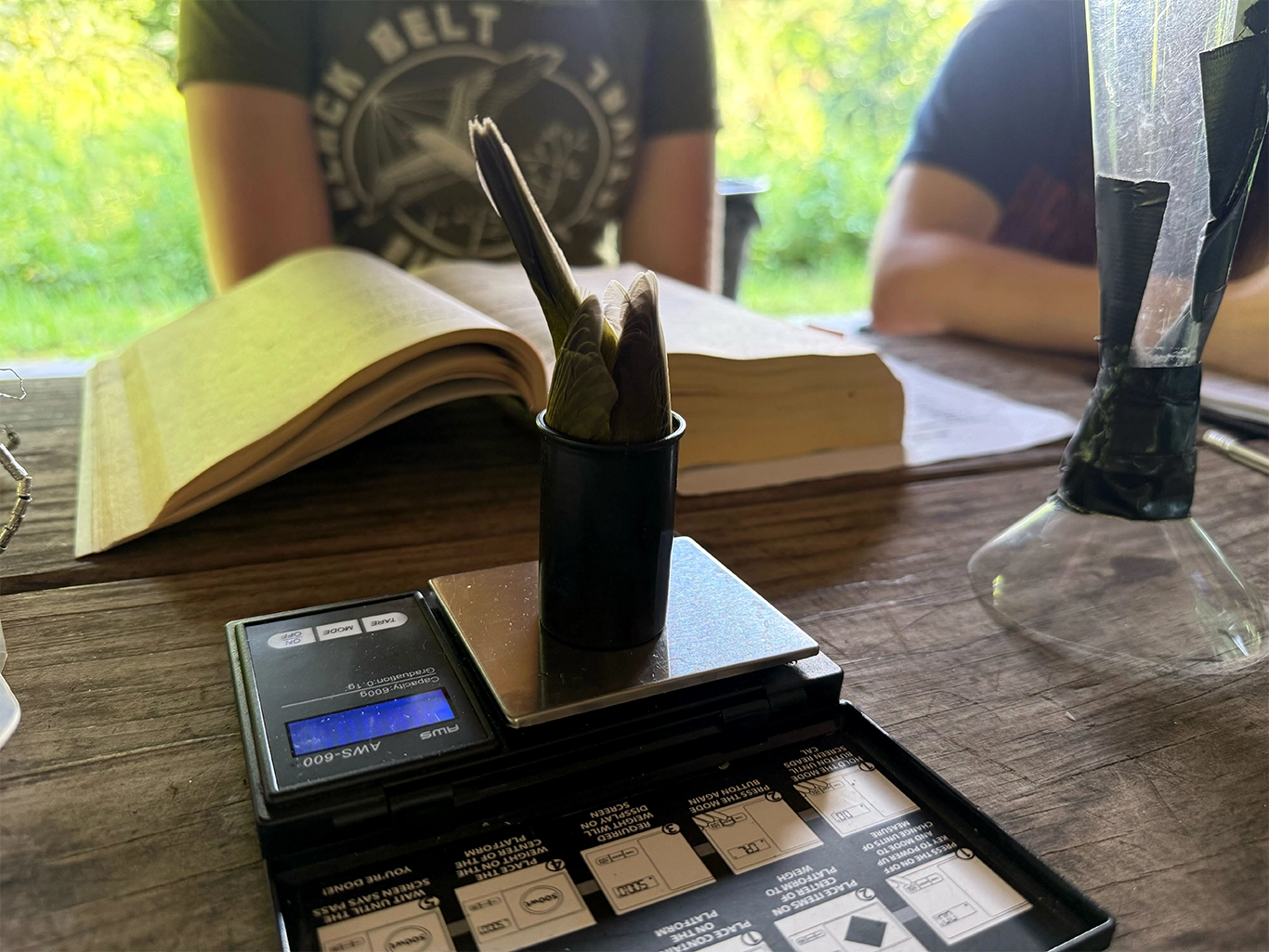
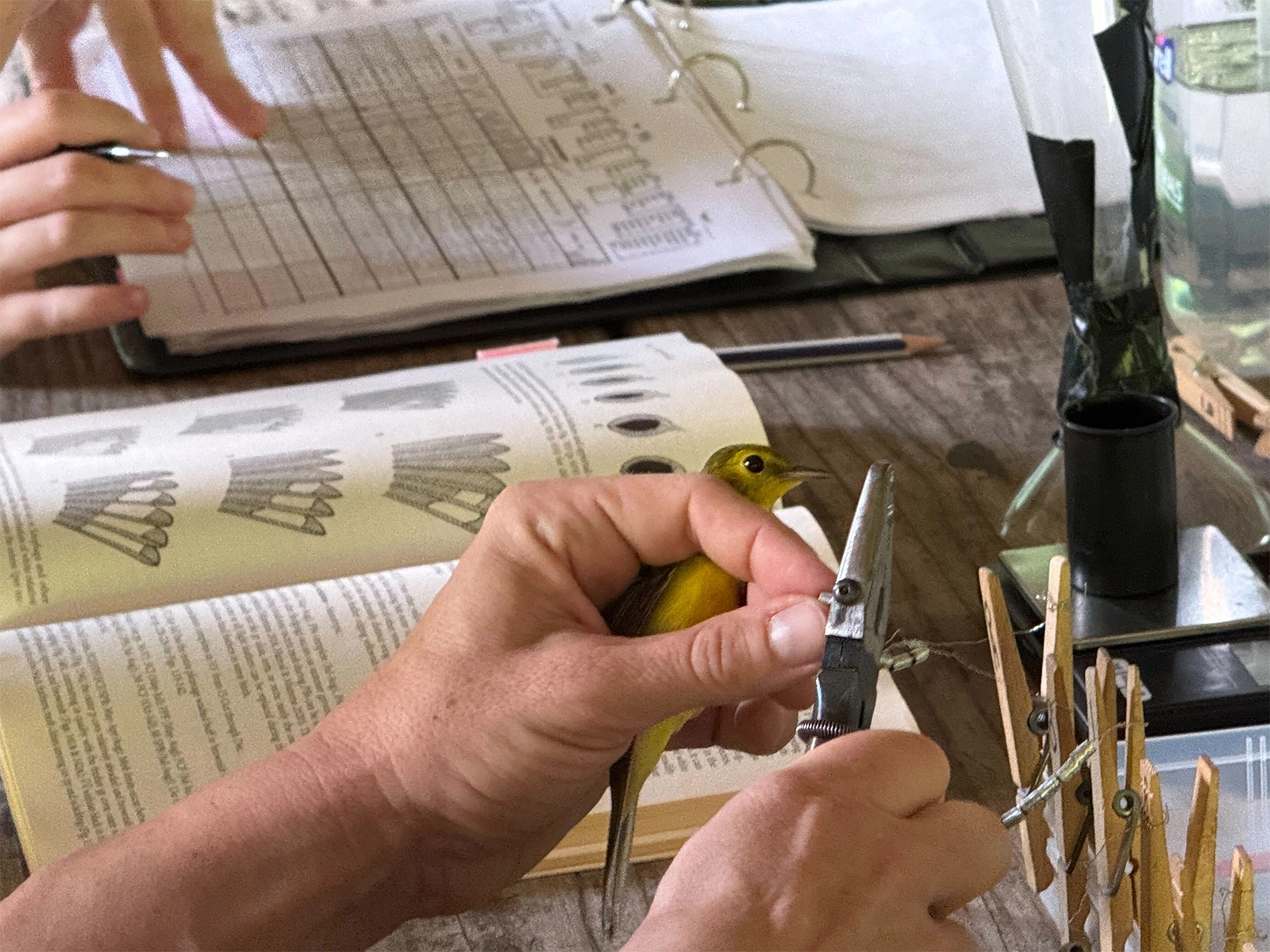
Alabama Audubon is essential for this conservation effort. Lianne Koczur, Science & Conservation Director at Alabama Audubon, leads the MAPS Bird Banding efforts at Ruffner Mountain. Important data including 26 standardized data points for every bird captured is collected to help in understanding why populations are growing or declining.
Volunteers join Lianne and other Alabama Audubon and Jefferson County Greenways staff to make this program successful. We appreciate their work and long hours, often starting before sunrise during these banding days.
2026 Bird Banding Results
In the summer 2026 banding season, the following results were achieved at Ruffner Mountain:
- 81 birds banded across 17 species
- 48 individual birds recaptured across seven species
In our four years of this program, we have banded a total of 397 birds of 30 species as well as recaptured 94 birds of 12 species.
Most Banded Birds
- Hooded Warbler (Setophaga citrina) – 26
- Carolina Wren (Thryothorus ludovicianus) – 11
- Kentucky Warbler (Geothlypis formosa) – 9
Most Recaptured Birds (Individual Counts)
- Northern Cardinal (Cardinalis cardinalis) – 8
- Carolina Wren (Thryothorus ludovicianus) – 5
- Hooded Warbler (Setophaga citrina) – 5
- Swainson’s Warblers (Limnothlypis swainsonii) – 4
Notable Highlights from the 2026 Season
It was really impressive to see so many hooded warblers using the small sample habitat at Ruffner Mountain. In the past three years, we have consistently banded hooded warblers on the habitat with 25 banded in our second year of 2024, but we topped that this season with 26. All together we have banded 70 hooded warblers.
Interestingly, we also recaptured our very net friendly Swainson’s warbler (band 322108485) five additional times this season. We first banded this male Swainson’s warbler in May 2023 ( our first season) and have recaptured him each season since for a total of 15 times. Each time we recapture him – and all other recaptured birds — we get new data on weight, wing length, molting patterns, and breeding conditions. Hopefully, he will return again next year after his winter migration to Central or South America.
MAPS Program: Four-Year Summary at Ruffner Mountain
2023: Birds banded- 122,
Species banded- 25, Total recaptures- 45
2024: Birds banded- 113,
Species banded- 18, Total recaptures- 57
2025: Birds banded- 80,
Species banded- 20, Total recaptures- 64
2026: Birds banded-81,
Species banded- 17, Total recaptures- 48
TOTAL: Birds banded- 396,
Species banded- 30, Total recaptures- 214
Over four years of this program, 396 birds from 30 species have been banded, and 94 individual birds from 12 species have been recaptured, with a total of 214 recapture events. This data shows that close to 25% of banded birds have been successfully recaptured, offering valuable insight.
Why MAPS Bird Banding Matters
Alabama is home to exceptional biodiversity. Projects like MAPS help conservationists track and better understand that diversity and plan future protection efforts. Although this is just the fourth year for this MAPS bird banding effort, we continue to see migratory birds returning to the same habitat from the previous years. It may be a few years before we see specific trends such as population changes or quantifiable offspring survivorship but every new banded bird and especially recaptured birds can provide more and more information for long-term conservation goals.
Visit The Institute for Bird Populations to learn more about the continent-wide MAPS program.
Regulatory Note
All bird banding activities are conducted under a federally authorized Bird Banding Permit issued by the U.S. Geological Survey’s Bird Banding Laboratory (BBL).